

Diseases transmitted from animals to humans are referred to as animal-borne, or zoonotic, diseases. These diseases can be carried by various animals and insects (e.g., rodents, mosquitoes or ticks) and can then be transmitted to humans. A few examples of zoonotic diseases include rabies, hantavirus, toxoplasmosis, Lyme disease, West Nile virus, and giardiasis. Some zoonotic diseases can only be transmitted to people from the carrier species and cannot be passed between humans; others can be spread from one infected person to another.
Animal-borne diseases are more common during the summer when people tend to be outdoors more often and for longer periods of time and when insects and wild animals are more active. Highly Pathogenic Avian Influenza (HPAI) remains a concern during wild bird migration periods in the fall and spring.
Contact Us
If you’d like more information, please contact our Environmental Health Manager:
Melvin Bustos
(970) 867-4918 ext. 2262
melb@nchd.org
West Nile Virus: Protection is Prevention
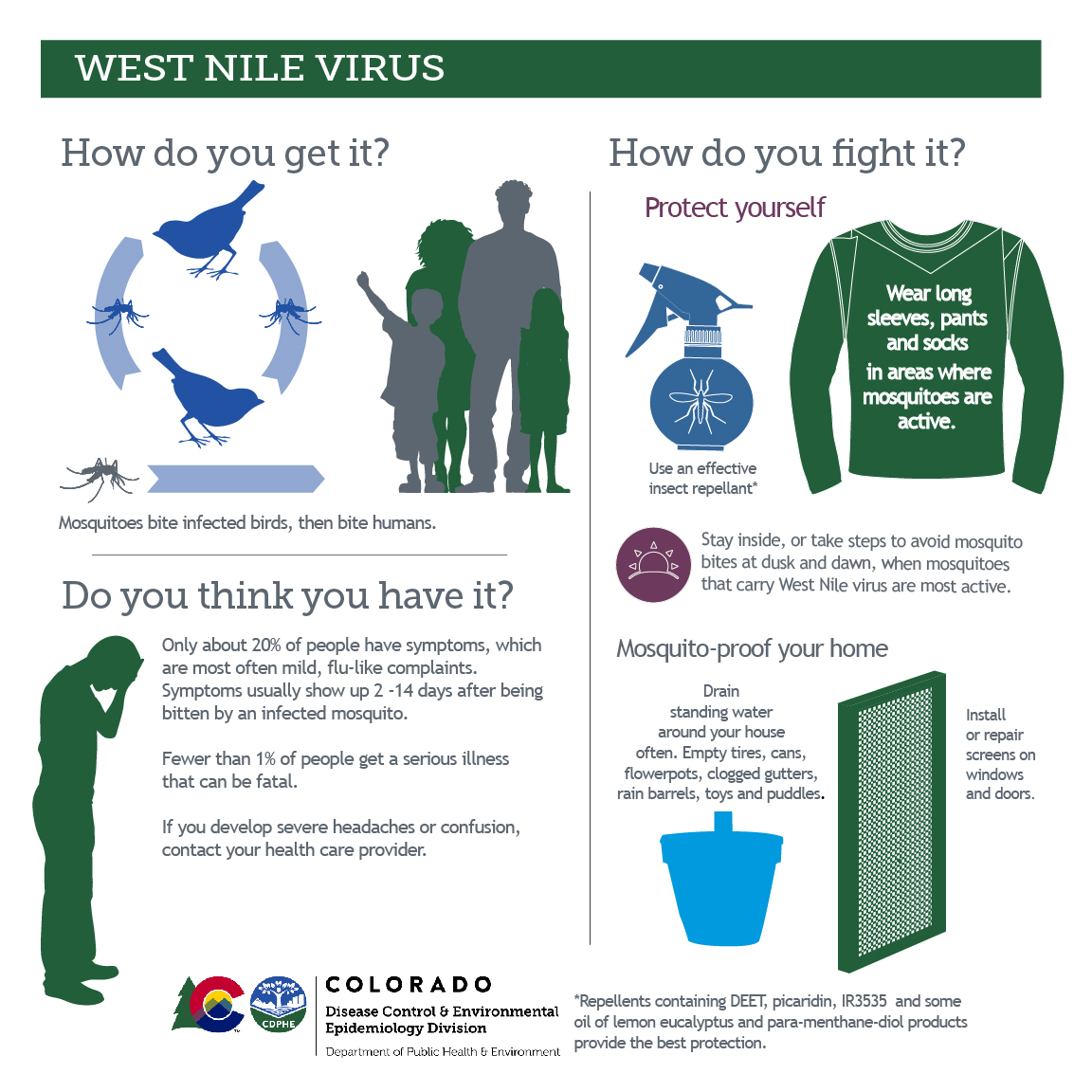
West Nile virus disease, “West Nile,” is the most common mosquito-transmitted virus in the U.S. Birds and mosquitoes carry West Nile virus and infected mosquitoes pass the virus to humans and other animals through bites. Colorado consistently has reportable cases of West Nile every year, which include hospitalizations and deaths. In 2023, Colorado saw the highest number of cases since recording began in 2003, in humans, animals, and tested mosquitoes, including in the NCHD health district. There were 634 reported human cases, including 51 deaths — the highest number of cases in the nation. Although 2024 was a milder year, the number of cases can vary widely from season to season, and human cases are a signal to stay alert.
In 2025, the first mosquitoes carrying West Nile virus were detected in Larimer County during June, followed shortly by cases in mosquitoes and humans throughout northern Colorado. Mosquitoes remain active until the first hard freeze, and are most active during the time around dawn and dusk, especially in wet areas. The highest risk of West Nile virus transmission is from July through September. In June 2026, the first case of human WNV has already been detected in Jefferson County.
Symptoms typically appear three to 14 days after being bitten and may include fever, severe fatigue, headache, body aches, skin rash and swollen lymph nodes. While most people infected with West Nile virus don’t have symptoms, some can develop a serious, potentially deadly illness. People aged 60 years and older and those with certain medical conditions are at greater risk of serious illness. Talk with a health care provider if you develop a fever with severe headaches or confusion.
West Nile isn’t contagious between people, but there is no vaccine or treatment, and the only way to protect yourself from the risk of disease is to prevent mosquito bites.
Prevent West Nile by following 4 basic recommendations:
-
Use insect repellent with DEET, picaridin, IR3535, oil of lemon eucalyptus, or para-menthane-diol. Follow label instructions.
-
Limit time outside at dawn and dusk, when mosquitoes that spread the virus are most active.
-
Wear long sleeves, pants, and socks in areas with mosquito activity and apply repellent to clothing. Use head nets and cover baby carriers with netting.
-
Remove standing water from yards and gutters weekly. Treat water that can’t be drained with Bti larvicide – learn about Bti for mosquito control.
-
Install or repair window and door screens.
More information about West Nile virus, prevention, and Colorado West Nile virus data can be found in the following links:
Hantavirus and Safe Cleaning Practices
Hantavirus is carried by rodents, most commonly deer mice and rats, and can cause severe and potentially deadly disease in humans who have contact with them.
Exposure can include breathing in the virus when dust containing particles is stirred up, or from touching eyes, nose, or mouth after contact with an object or surface contaminated with rodent urine or droppings. People most at risk include those who handle or clean up after rodents, or who spend time in environments where rodents make nests. Early symptoms include fever, chills, muscle aches/weakness, abdominal pain, nausea, vomiting, and diarrhea. If you experience these symptoms and have had exposure to rodent droppings, seek medical care immediately.
For more information about the disease and risks, please visit the Hantavirus Pulmonary Syndrome webpage of the American Lung Association.
There are several simple cleaning recommendations to follow to reduce the chances of exposure to hantavirus from rodent droppings. Visit the CDC webpage, How to Clean Up After Rodents for details about how to safely clean up after rodents in a variety of spaces.
Highly Pathogenic Avian Influenza (HPAI): An Ongoing Concern
Wildfowl migration again puts Colorado in the path of Highly Pathogenic Avian Influenza (HPAI), which is widespread in wild birds, especially waterfowl, worldwide and can easily be spread to domestic and commercial flocks, where it is deadly. It also affects dairy cattle, domestic cats, and less frequently skunks, bears, and other mammals.
Some species of waterfowl and wild birds can carry the H5N1 virus without getting sick or showing signs and then pass the virus to other bird species who will become sick with the disease. While it is rare for humans to get the disease, it is possible. People at higher risk of infection include people with job-related or recreational exposure to infected birds or other animals. A person may become very sick from bird flu if they have underlying medical conditions, are older, or delay getting medical care after exposure. Exposed humans also carry the virus back to domestic flocks on their clothing and footwear.
Hunters can reduce their risk of becoming infected or carrying bird flu home by taking extra precautions.
- Do not handle or eat sick game.
- Field dress and prepare game outdoors or in a well-ventilated area.
- Wear rubber or disposable latex gloves while handling and cleaning game.
- When done handling game, wash hands with soap or disinfectant and clean knives, equipment, and surfaces.
- Do not eat, drink, or smoke while handling animals.
- Keep uncooked game in a separate container from any ready-to-eat foods.
- All game should be thoroughly cooked to an internal temperature of 165 degrees Fahrenheit before being consumed.
Also, monitor your health for any flu-like symptoms within a week after hunting waterfowl and handling birds. If you feel ill, contact your healthcare provider immediately. Symptoms may include fever, cough, sore throat, runny or stuffy nose, eye tearing/redness/irritation, sneezing, difficulty breathing, shortness of breath, fatigue, muscle or body aches, headaches, nausea, vomiting, diarrhea, seizures, rash.
If you have handled a sick or dead bird and develop the following symptoms within 10 days of contact, please reach out to your healthcare provider to assess your exposure and set up testing if appropriate: fever, cough, sore throat, runny or stuffy nose, eye tearing/redness/irritation, sneezing, difficulty breathing, shortness of breath, fatigue, muscle or body aches, headaches, nausea, vomiting, diarrhea, seizures, rash.
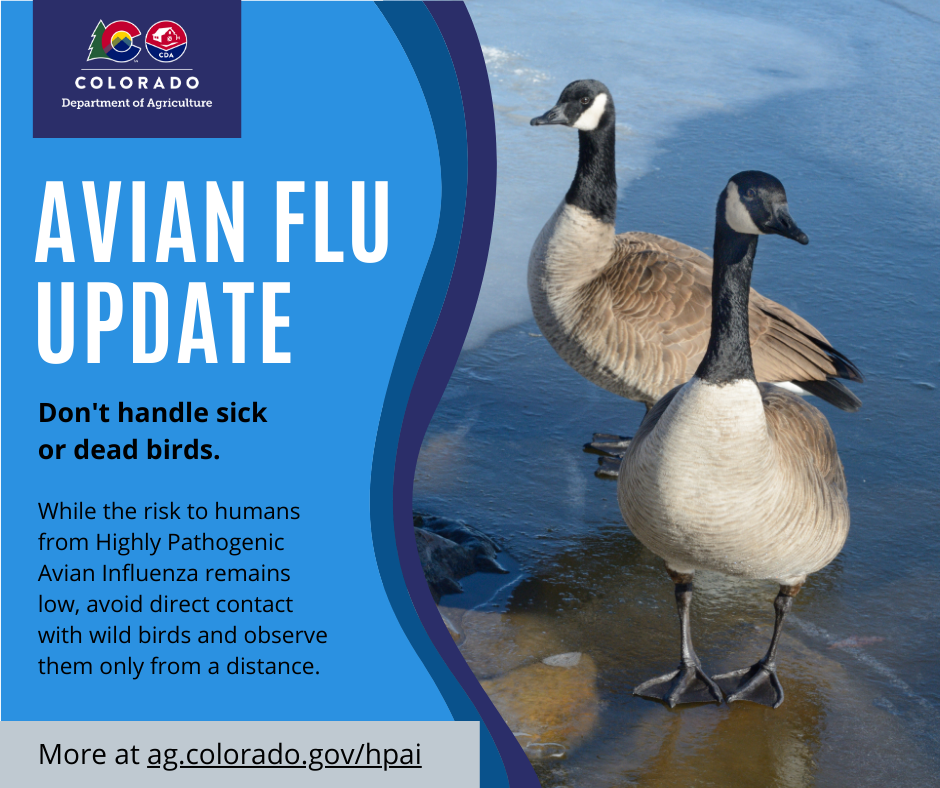
If you find deceased birds on your property and need to dispose of them, take extra precautions when removing them.
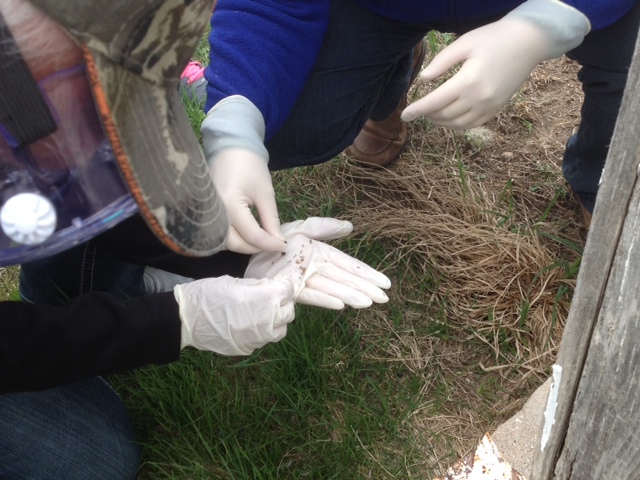
- Wear a mask and disposable gloves if you must handle any dead birds.
- Double bag any carcasses and discard in an outdoor trash container.
- Discard the mask and gloves and immediately wash your hands and clean your shoes.
For information about reporting sick domestic birds, unusual birds deaths, or dead wild birds, please visit the Colorado Department of Agriculture Avian Influenza webpage. In northeast Colorado, the local office is in Brush, Colorado, telephone 970-842-6300.
For news and detections of the H5N1 strain of avian influenza, please visit the Animal and Plant Health Inspection Service of the US Department of Agriculture webpage H5N1 Influenza.
Colorado Department of Agriculture resource pages: